
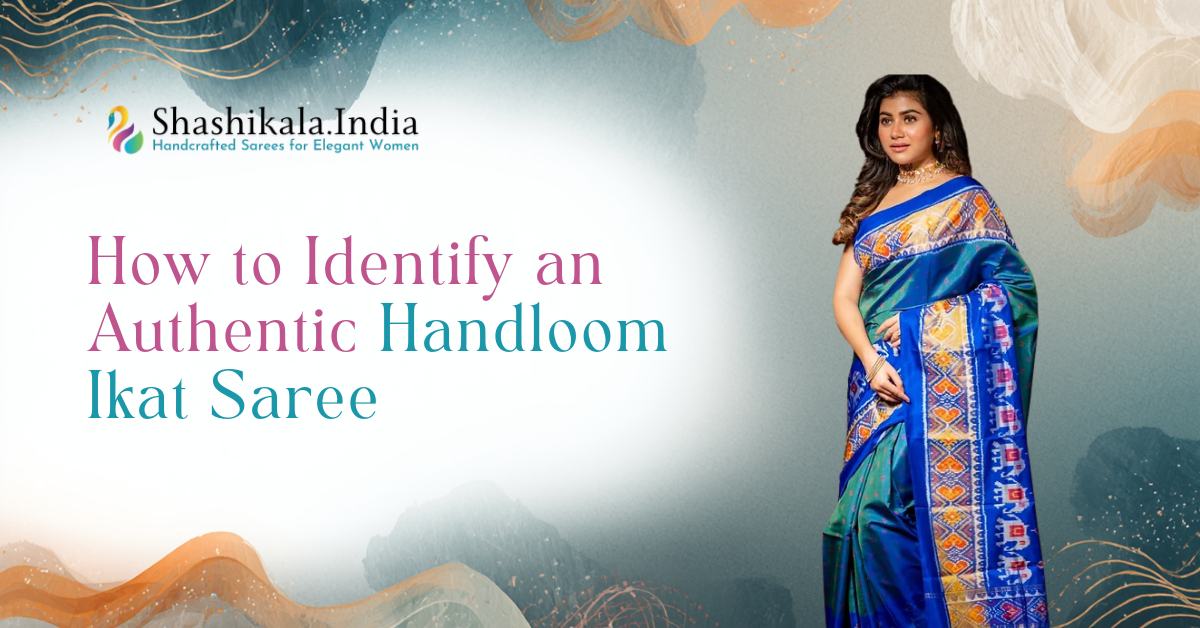
How to Identify an Authentic Handloom Ikat Saree (Avoid Fake Prints – 2026 Guide)
Ikat sarees are beautiful. They look artistic, rich, and timeless. But today, many buyers feel confused while buying Ikat sarees online. The reason is simple. The market is full of printed Ikat copies that look similar to real handloom Ikat.
Because of this confusion, many people hesitate to buy. Some even lose trust after buying a fake one by mistake.
This guide will help you. You will learn how to identify an authentic handloom Ikat saree step-by-step. By the end of this blog, you will feel confident and clear while buying Ikat sarees.
Why Knowing the Difference Between Real and Fake Ikat Matters
An Ikat saree is not just a design. It is a traditional dye-before-weave technique. This means the yarn is dyed first, and then woven carefully on a handloom.
Printed Ikat copies skip this entire process. They only print designs on fabric.
If you know how to identify real Ikat:
- You avoid overpaying for fake prints
- You support real weavers
- You get better fabric quality
- Your saree lasts longer
- You feel confident while shopping online
That is why this knowledge is important.
What Makes a Handloom Ikat Saree Unique
Before learning how to check authenticity, you must understand what makes handloom Ikat special.
A genuine handloom Ikat saree has:
- Yarn dyed before weaving
- Designs created by skill, not machines
- Slight irregularities (this is a good sign)
- A soft, natural fabric feel
- A pattern that goes through the fabric, not just on top
Every real Ikat saree is slightly different. That is its beauty.
Check the Pattern Edges – Why Real Ikat Looks Slightly Blurred
This is the most important and easiest check.
How Real Ikat Looks
In a genuine handloom Ikat saree:
- Pattern edges look slightly blurred
- Lines are not perfectly sharp
- Colours softly blend into each other
This happens because the yarn is dyed first. When woven, the design aligns by hand. Small variations are natural.
How Fake Printed Ikat Looks
In printed Ikat copies:
- Edges look very sharp
- Lines look perfect and exact
- Design looks flat, like a stamp
Remember: Too perfect = most likely fake. Real Ikat celebrates imperfection.
Same Design on Both Sides – A Key Sign of Woven Ikat
This is a strong authenticity test.
Check the Back Side of the Saree
Authentic Handloom Ikat
- Design is visible on both sides
- Colours look similar on the front and back
- No plain white or faded back side
This is because the design is woven using dyed yarn.
Printed Ikat Copy
- The back side looks pale or white
- Design is visible only on one side
- Fabric feels coated or flat
If the design disappears on the reverse side, it is not woven Ikat.
Feel the Yarn – Texture, Weight & Natural Irregularities
Touch tells the truth.
How Genuine Ikat Feels
- Soft and natural
- Slightly uneven texture
- Breathable and light
- No plastic or glossy feel
You may feel small variations in the weave. This is normal in handloom sarees.
How Printed / Powerloom Ikat Feels
- Smooth like paper or plastic
- Sometimes stiff
- Uniform texture everywhere
- Often heavier due to chemical coating
If the saree feels too smooth or slippery, be careful.
Why Powerloom & Printed Ikat Looks “Too Perfect”
Many fake Ikat sarees look attractive in photos. But perfection is the clue.
Signs of Machine-Made Ikat
- Same design repeated exactly
- Perfect symmetry everywhere
- No variation in colour alignment
- Fabric feels factory-finished
Handloom Ikat is made slowly. Human hands cannot create exact repetition. Real Ikat has soul. Fake Ikat has polish.
Look at Colour Depth – Natural vs Artificial Shine
Real Ikat uses traditional dyeing methods.
Authentic Ikat Colours
- Deep but soft colours
- Matte or natural finish
- No extreme shine
Printed Ikat Colours
- Very bright or neon shades
- Artificial shine
- Colours sit on top of fabric
If the saree looks shiny under light, it may be printed.
Check the Saree Description Carefully (Online Buyers)
When buying online, words matter.
Signs of Authentic Sellers
- Mention “handloom Ikat” clearly
- Explain dye-before-weave technique
- Share close-up photos
- Mention the region or the weaving method
- Provide fabric details
Red Flags
- Only says “Ikat print.”
- No fabric details
- Very low price
- No zoomed images
- No return policy
Always read descriptions slowly.
Authenticity Checklist
Before buying, check this list:
- Pattern edges are slightly blurred
- Design visible on both sides
- Fabric feels soft and breathable
- No plastic shine
- Slight irregularities present
- Price is realistic, not too cheap
- The seller mentions handloom clearly
If most boxes are ticked, you are likely buying a genuine handloom Ikat saree.
Common Myths About Ikat Sarees
Myth 1: All Ikat sarees look blurry
Truth: Only the pattern edges are soft, not unclear.
Myth 2: Printed Ikat is also a handloom
Truth: Printing and weaving are completely different.
Myth 3: Expensive means original
Truth: Description and construction matter more than price.
Why Buying Authentic Ikat Is Worth It
When you buy a real handloom Ikat saree:
- It lasts for years
- Fabric improves with washing
- Colours age beautifully
- You support real artisans
- You own a piece of tradition
Authentic Ikat is not fast fashion. It is a slow, meaningful craft.
Conclusion: Buy Authentic Handloom Ikat with Confidence
Ikat sarees are beautiful when they are real. Once you know what to check, pattern edges, fabric feel, reverse side, and natural finish, you will never feel confused again.
Trust your eyes. Trust your touch. And trust authentic sellers.
Explore our authentic handloom Ikat sarees, crafted using traditional dye-before-weave techniques. Buy genuine Ikat sarees with confidence and clarity.


About author


Add comment