
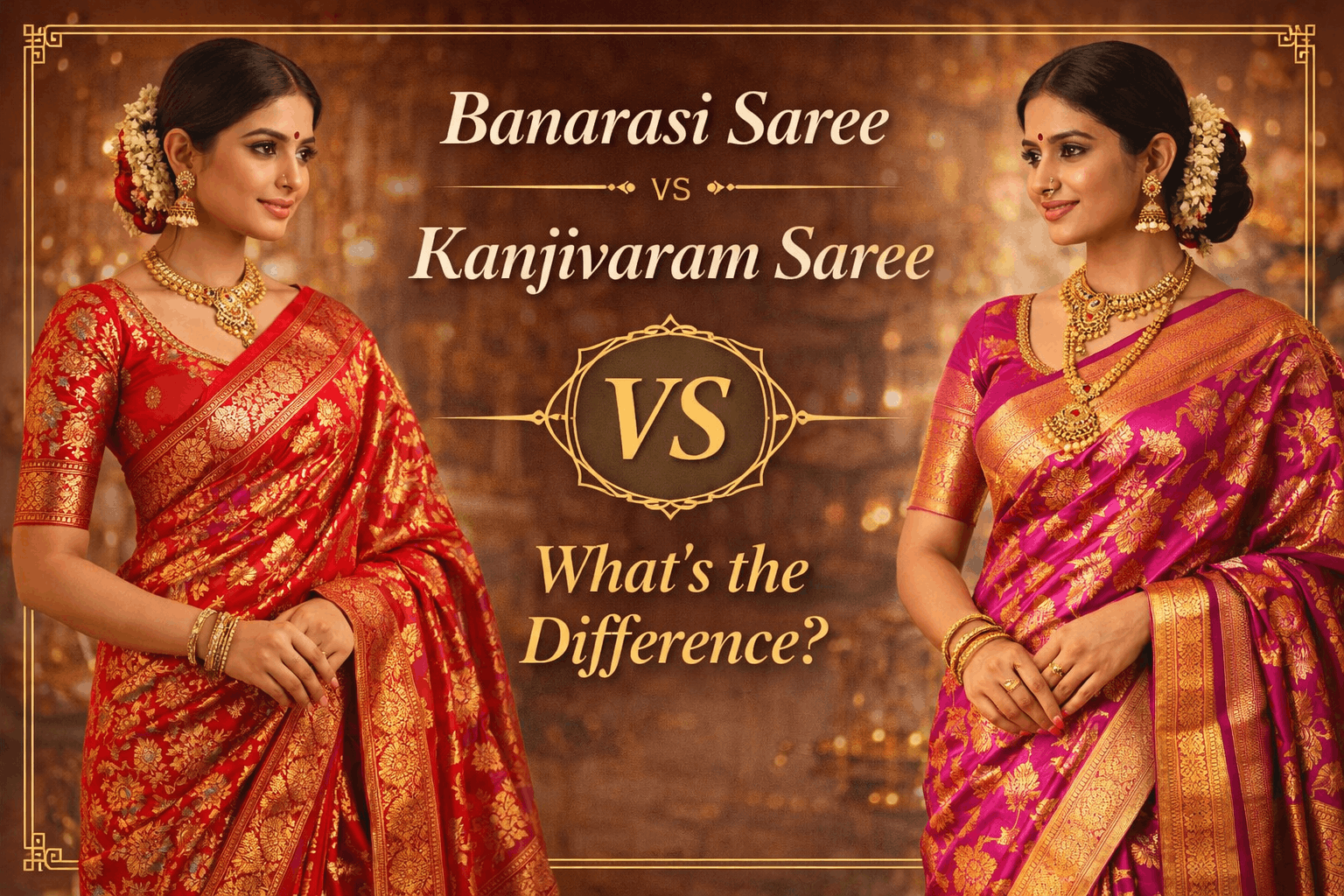
Banarasi Saree vs Kanjivaram Saree: What’s the Difference?
Why Banarasi and Kanjivaram are India’s Most Iconic Silk Sarees
When it comes to bridal silk sarees and timeless Indian fashion, two names stand above the rest Banarasi saree and Kanjivaram saree. Both are known for their rich silk, intricate weaving, and royal appeal.
But if you’re planning a wedding, festive purchase, or investment saree, the question becomes important:
Banarasi saree vs Kanjivaram saree: which one should you choose?
This guide breaks down the key differences in silk, weaving, design, and price, so you can make a confident decision.
Origin & Heritage of Banarasi and Kanjivaram Sarees
Banarasi Saree
- Originates from Varanasi (Banaras), Uttar Pradesh
- Influenced by Mughal art and Persian motifs
- Known for fine silk and intricate brocade weaving
- Strong presence in North Indian bridal wear
Kanjivaram Saree
- Comes from Kanchipuram, Tamil Nadu
- Inspired by South Indian temple architecture
- Famous for thick silk and durable weaving
- A traditional choice for South Indian weddings
Both sarees are deeply rooted in Indian culture and represent handloom craftsmanship at its finest.
Silk Quality & Weaving Techniques Compared
| Feature | Banarasi Saree | Kanjivaram Saree |
| Silk Type | Fine, soft silk | Thick mulberry silk |
| Weight | Lightweight to medium | Heavy and structured |
| Weaving Style | Brocade weaving (zari woven into fabric) | Korvai technique (body & border woven separately) |
| Durability | Elegant but delicate | Highly durable and long-lasting |
Key Insight:
- Banarasi silk is lightweight, soft, and flowy
- Kanjivaram silk is thick, strong, and rich
If comfort matters → choose Banarasi
If richness matters → choose Kanjivaram
Design, Motifs & Zari Work Differences
Banarasi Saree Design
- Mughal-inspired motifs:
- Floral (kalga, bel)
- Paisley patterns
- Jaal (all-over designs)
- Fine and detailed zari work
- Elegant and intricate look
Kanjivaram Saree Design
- Temple-inspired motifs:
- Peacocks, elephants
- Checks and stripes
- Traditional temple borders
- Bold contrast borders
- Heavy gold zari work
Zari Work Comparison
- Banarasi saree → delicate, detailed zari
- Kanjivaram saree → bold, thick zari
Banarasi = Graceful elegance
Kanjivaram = Royal statement
Bridal & Festive Use – Which Saree Is Best?
Choose Banarasi Saree if:
- You want a lightweight bridal saree
- You prefer subtle elegance
- You need a saree for:
- Reception
- Engagement
- Festive wear
Choose Kanjivaram Saree if:
- You want a traditional wedding saree
- You love a heavy and grand look
- Ideal for:
- Wedding ceremony
- Temple rituals
- Heirloom collection
Pro Tip:
Many brides choose both —
Banarasi for the reception and Kanjivaram for the wedding ceremony.
Price Comparison – Banarasi vs Kanjivaram Sarees
| Price Factor | Banarasi Saree | Kanjivaram Saree |
| Starting Range | ₹5,000 – ₹15,000 | ₹8,000 – ₹25,000 |
| Premium Range | ₹20,000 – ₹1,00,000+ | ₹25,000 – ₹2,00,000+ |
| Price Drivers | Zari’s work complexity | Silk quality and weaving |
What affects the price?
- Silk purity
- Real zari vs tested zari
- Handloom vs powerloom
- Design complexity
Kanjivaram sarees are usually more expensive due to thicker silk and labor-intensive weaving.
How to Choose the Right Saree for Your Occasion
Choose Banarasi Saree if:
- You want comfort and elegance
- You need a saree for multiple occasions
- You prefer a lighter drape
Choose Kanjivaram Saree if:
- You want a grand bridal saree
- You value tradition and durability
- You prefer a rich and structured look
Conclusion: Which One Should You Buy?
Both sarees are timeless and valuable additions to your wardrobe.
- Banarasi saree → Best for elegance, versatility, and comfort
- Kanjivaram saree → Best for tradition, richness, and bridal impact
If you’re starting your collection, a Banarasi saree is a versatile and practical choice.
Explore Authentic Banarasi Sarees
Looking for a saree that blends heritage with elegance?
Explore authentic Banarasi sarees crafted with traditional silk weaving.
Also Read:


About author


Add comment