
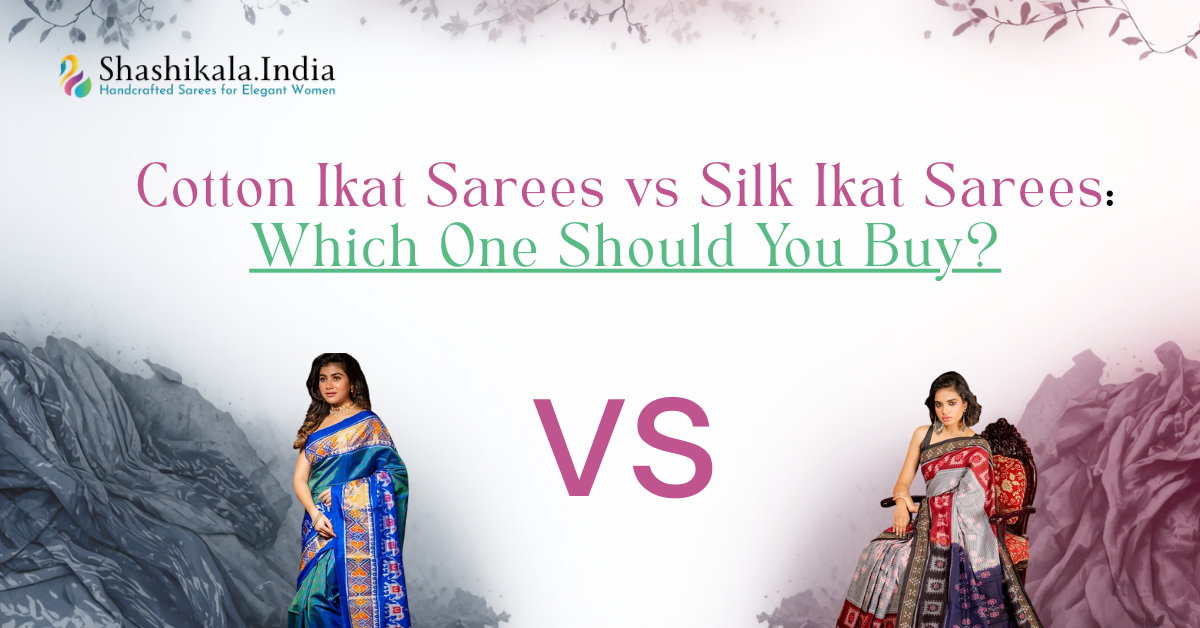
Cotton Ikat Sarees vs Silk Ikat Sarees: Which One Should You Buy? (2026 Buyer Guide)
Ikat sarees are loved for their beautiful patterns and traditional weaving. But many buyers get confused at one point.
Should I buy a cotton Ikat saree or a silk Ikat saree? Both are handloom. Both are authentic. But both are used for different purposes.
This guide will help you clearly understand the difference between cotton Ikat sarees and silk Ikat sarees. By the end, you will know which one suits your lifestyle, budget, climate, and occasion.
Why Choosing the Right Ikat Fabric Matters
Ikat is a weaving technique, not a fabric. This means Ikat designs can be woven using cotton yarn or silk yarn.
If you choose the wrong fabric:
- You may feel uncomfortable
- The saree may not suit the occasion
- Maintenance may become difficult
- You may not wear it often
Choosing the right Ikat fabric helps you:
- Feel comfortable
- Look appropriate
- Get value for money
- Use the saree for many years
Cotton Ikat vs Silk Ikat – Fabric & Weave Basics
Let us first understand the basic difference.
Cotton Ikat Sarees
- Made using cotton yarn
- Lightweight and breathable
- Soft and comfortable on skin
- Matte and natural finish
- Perfect for regular use
Cotton Ikat sarees are known as everyday Ikat sarees.
Silk Ikat Sarees
- Made using silk yarn
- Rich texture and natural shine
- Slightly heavier than cotton
- Elegant and festive look
- Considered a premium handloom
Silk Ikat sarees are often called festive Ikat silk sarees.
Simple Comparison Table
| Feature | Cotton Ikat Saree | Silk Ikat Saree |
| Yarn | Cotton | Silk |
| Look | Simple & Soft | Rich & elegant |
| Finish | Matte | Natural shine |
| Weight | Very Light | Medium |
| Best Use | Daily & Office | Wedding & Festivals |
Also read:- How to Identify an Original Ajrakh Saree vs Fake Prints (Authenticity Guide 2026)
Daily Wear vs Festive Wear – When to Choose What
This is the most important decision factor.
When to Choose Cotton Ikat Sarees
Choose a cotton Ikat saree for daily wear if:
- You go to office regularly
- You need comfort for long hours
- You travel or move a lot
- You prefer easy draping
- You like simple and graceful looks
Cotton Ikat sarees are ideal for:
- Office wear
- Daily wear
- Teaching professionals
- Summer use
- Casual gatherings
You can wear them again and again without worry.
When to Choose Silk Ikat Sarees
Choose a silk Ikat saree for weddings and occasions if:
- You want a rich, traditional look
- You are attending functions
- You want statement sarees
- You wear sarees occasionally
- You like festive styling
Silk Ikat sarees are perfect for:
- Weddings
- Festivals
- Family functions
- Special celebrations
- Gift purposes
They look grand even with minimal styling.
Climate Suitability – Summer, Winter & All-Season Use
Climate plays a big role in comfort.
Cotton Ikat Sarees & Climate
- Best for hot and humid weather
- Absorbs sweat easily
- Keeps the body cool
- Suitable for Indian summers
If you live in a warm region, cotton Ikat is the safest choice.
Silk Ikat Sarees & Climate
- Best for cooler weather or AC environments
- Not ideal for peak summer afternoons
- Comfortable for evening events
- Good for winter and festive seasons
All-Season Tip
Many buyers keep:
- Cotton Ikat for daily use
- Silk Ikat for special occasions
This way, you enjoy both comfort and elegance.
Also read:- How to Style Mangalagiri Cotton Sarees for Office, Daily Wear & Festive Occasions
Price Comparison – What Affects the Cost of Ikat Sarees
Price is another big difference.
Cotton Ikat Saree Price Range
- Simple handloom cotton Ikat: ₹2,000 – ₹4,000
- Finer weave or natural dyes: ₹4,000 – ₹6,000
These are affordable and value-for-money sarees.
Silk Ikat Saree Price Range
- Silk Ikat sarees usually start from ₹6,000
- Premium pieces can go up to ₹15,000 or more
What Affects the Ikat Saree Price
- Type of yarn (cotton or silk)
- Complexity of design
- Time taken to weave
- Natural vs chemical dyes
- Handloom craftsmanship
If a “silk Ikat” saree is priced very low, it may not be genuine.
Maintenance & Durability – Washing, Storage & Longevity
This is where many buyers hesitate.
Cotton Ikat Saree Maintenance
- Easy to wash
- Hand wash or gentle machine wash
- Mild detergent
- Simple storage
- Becomes softer over time
Cotton Ikat sarees are low-maintenance.
Silk Ikat Saree Maintenance
- Needs extra care
- Dry clean recommended
- Store in cotton cloth
- Avoid direct sunlight
- Use silica gel or neem leaves
Silk Ikat sarees are high-maintenance but long-lasting if cared properly.
Durability Comparison
- Cotton Ikat: Great for frequent use
- Silk Ikat: Best for occasional use
Both last many years if they are authentic handloom Ikat sarees.
Which One Is Better for First-Time Buyers?
If you are buying Ikat for the first time:
- Start with cotton Ikat sarees
- Understand the weave and feel
- Get comfortable with Ikat patterns
Once confident, you can move to silk Ikat.
Quick Decision Guide (Save This)
Choose Cotton Ikat Saree if:
- You want daily or office wear
- You live in a hot climate
- You want easy maintenance
- You have a moderate budget
Choose Silk Ikat Saree if:
- You need festive or wedding wear
- You prefer rich traditional look
- You wear sarees occasionally
- You are okay with extra care
Also read:- How to Identify Genuine Handloom Sarees – Complete Buyer’s Guide
Why Both Cotton & Silk Ikat Are Worth Buying
Cotton Ikat and silk Ikat are not competitors. They serve different purposes.
A balanced wardrobe often has:
- 2–3 cotton Ikat sarees for regular use
- 1–2 silk Ikat sarees for special occasions
This gives you comfort, variety, and tradition.
Also read:- Chanderi Saree Buying Guide: How to Choose the Best Authentic Handloom in 2026
Conclusion: Which Ikat Saree Is Right for You?
There is no single “better” choice. The right choice depends on how and when you will wear it.
- For comfort, daily use, and summer → Cotton Ikat Sarees
- For elegance, festivals, and weddings → Silk Ikat Sarees
Once you understand this difference, buying becomes easy and confident.
Explore our handloom Ikat sarees curated for daily wear and special occasions. Choose authentic Ikat. Choose comfort. Choose tradition.


About author


Add comment